For any general or subscription enquiries, please get in touch via email [email protected]

On-demand CPD and best practice training hub for health, safety and wellbeing professionals and fire safety professionals. Enhance your professional development, stay up-to-date with compliance issues, reduce risk, save money, and learn anytime, anywhere.
Subscription costs from just £25 per month with a minimum 12-month commitment.


 64 min 6 sec
 Fire Safety
Discover the power of wireless fire protection — a smarter, more flexible approach to modern fire safety. Once seen primarily as a solution for difficult or sensitive installations, wireless fire detection is now being adopted across a wide range of applications thanks to advances in performance, reliability and system design.With the publication of the updated BS 5839-1 guidance for 2025, there is renewed focus on best-practice system design, documentation and reliability. Wireless fire systems, when based on EN54-certified components, can be specified in line with these principles, giving specifiers, installers and end users confidence that wireless technology can form part of a fully compliant fire detection strategy.By eliminating the need for complex cabling, wireless fire systems enable faster installation with significantly less disruption. This makes them particularly well suited to heritage buildings, occupied schools, healthcare environments, and operational industrial sites — where maintaining day-to-day activity is essential.Beyond installation benefits, wireless fire protection also delivers long-term value. Reduced installation time, cleaner aesthetics and scalable system design support cost efficiency and future expansion. As the industry continues to align with the expectations set out in BS 5839-1:2025, wireless fire detection stands out as a reliable, standards-ready solution for modern buildings.
 19 min 33 sec
Health & Safety
19 min 33 sec
Health & Safety
This session was recorded at Health & Safety Matters Live Leeds in March 2026. Davy Snowdon, a former Olympic weightlifter, shares how he applied Olympic weightlifting principles to industrial manual handling training, discovering that showing workers the physical discomfort of incorrect techniques and demonstrating pain-free alternatives creates the most effective behaviour change.Through real-world applications—from paper mills to electrical towers to airport baggage handling—he demonstrates how the "pristine principles" reduce injury rates by over 70%, proving that realistic, tangible training in workers' actual environments is far more effective than traditional safety policies and procedures.1
 34 min 29 sec
Health & Safety
34 min 29 sec
Health & Safety
This session was recorded at the NEBOSH conference in Leeds in March 2026. Alexis Powell-Howard discusses the hidden emotional load of work, including unspoken pressures, boundary erosion, chronic stress, relationship breakdowns, and the importance of psychological safety in organisations.She emphasises that leaders must transition from transactional to human-centered leadership by building emotional intelligence, fostering genuine recognition, implementing small incremental cultural changes, and providing appropriate support to help employees thrive mentally and professionally.
 80 min 10 sec
Fire Safety
80 min 10 sec
Fire Safety
This session was recorded at Fire Safety Matters Live London in March 2026. Leading fire safety lawyers Weightmans delivered this Mock Trial, which was based on a real-life prosecution following a fatal fire at a care home.The audience is the jury and following the verdict, Weightmans reveal what the verdict was in the real case and why.
 38 min 1 sec
Fire Safety
38 min 1 sec
Fire Safety
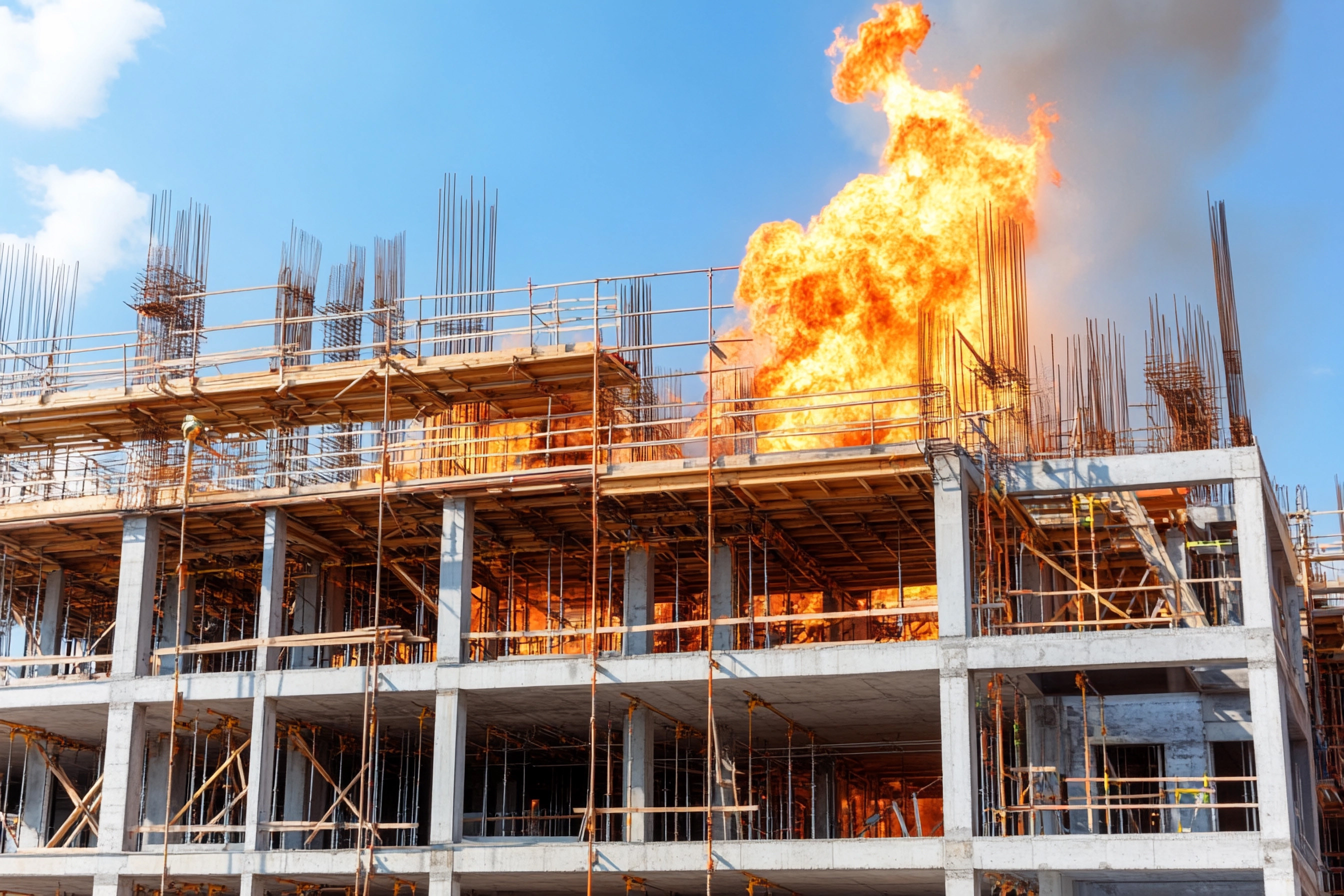
This session was recorded at the IFSM technical meeting at Fire Safety Matters Live London in March 2026. Steven Lakin addresses misconceptions about fire safety in construction, presenting 15 essential steps and key requirements based on legislation and guidance including the Regulatory Reform Fire Safety Order and CDM regulations.He emphasises the importance of clearly defining responsibility, implementing proper hot works permits and fire watch procedures, and moving the industry toward consistent compliance rather than accepting the status quo of recurring fire incidents on construction sites.
 37 min 57 sec
Fire Safety
37 min 57 sec
Fire Safety
This session was recored at IFSM Meeting at Fire Safety Matters Live in March 2026. Mark Chinery, a Fire Safety Manager at a London NHS trust, presents the critical operational challenges of corridor care—a practice where patients occupy hospital corridors due to overwhelming demand exceeding designed capacity by up to 300%.The presentation examines the compounding fire and safety risks, including blocked evacuation routes, infection control failures, and staff pressures, while discussing how fire brigades balance patient safety concerns against the reality of not having sufficient hospital infrastructure to accommodate the growing population demand.


